
Hawaii Island'sKilaueavolcanobegan erupting on March 10,spewing rock fragmentsas large as footballs, threatening nearby communities and closing nearby highways.
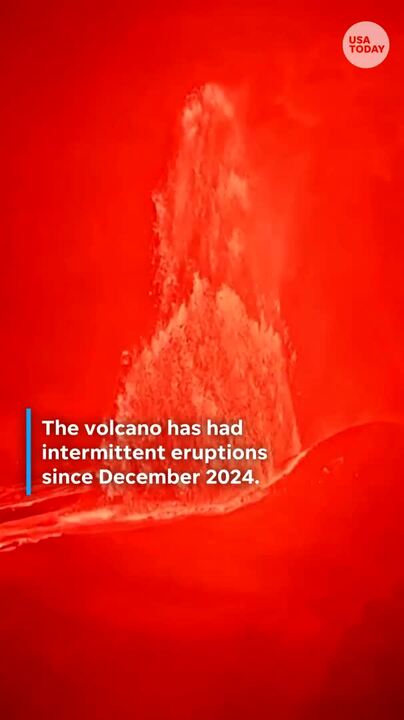
"Vigorous fountaining has started," Hawaii Volcanoes National Park said on itsFacebookpage.
The United States Geological Survey said fallout had created hazardous conditions in downwind areas, with one residentreportingmore than an inch of tephra — a mix of magma, rock and volcanic glass — on the roads of a golf course subdivision.
According to the United States Geological Survey, the eruption began at 9:17 a.m. Hawaii time, with a plume eventually reaching as high as 25,000 feet above sea level.
USGS videofrom the location featured dramatic footage of orange lava spewing from the volcano's Halemaʻumaʻu crater with plumes of black smoke floating skyward.
Park officials said Kilauea summit was closed due to "significant tephra fall," while falling tephra also forced the closure of a 16-mile stretch of nearby Highway 11.
Advertisement
"Avoid the area," officials warned on the park'sFacebook page.
TheUSGS observatorysaid large debris was raining on nearby communities.
"Golf course housing and highway 11 are being hit with tephra up to 5 inches," observatory monitors wrote.

Kilauea is among the world's most active volcanoes, with sporadic flare-ups since December 2024. This most recent eruption is the 43rd since Dec. 23, 2024.
Eruptions in late 2025 featured spewing lava lasting as long as five hours, fountains as high as 1,100 feet – and in November, a wind vortex of spinning ash known as a "volnado" within its caldera.
Reporter Kathleen Wong contributed to this report.
This article originally appeared on USA TODAY:Kilauea volcano erupts in Hawaii